On October 8th to the 10th of 1871, a fire raged in Chicago, Illinois. The fire is widely believed to have originated in the barn on DeKoven Street owned by Patrick and Catherine O’Leary. The two-day blaze killed between 200 and 300 people, destroyed 17,450 buildings, left 100,000 homeless and caused an estimated $200 million (in 1871 dollars; more than $4 billion today) in damages. The fire spread rapidly due to the city’s wooden construction, drought conditions, and strong winds. Dry weather and an abundance of wooden buildings, streets and sidewalks made Chicago vulnerable to fire.
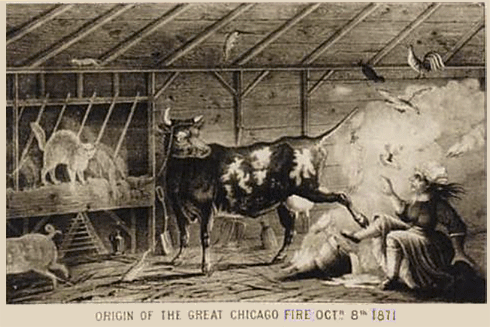
Legend has it that a cow kicked over a lantern in the O’Leary barn and started the fire, but other theories hold that humans or even a comet may have been responsible for the event that left four square miles of the Windy City, including its business district, in ruins. Other claims state that a group of men were gambling inside the barn and knocked over a lantern. Another claim alleges the blaze was related to other fires in the Midwest that day. One account by historian Richard Bales has suggested the fire started when Daniel “Pegleg” Sullivan, who first reported the fire, ignited hay in the barn while trying to steal milk.
The city averaged two fires per day in 1870; there were 20 fires throughout Chicago the week before the Great Fire of 1871. Prior to the fire Chicago had received only 1 inch of rain from July 4 to October 9. This caused severe drought conditions and with the strong southwest winds, to help carry flying embers, the fire quickly spread. While the fire had devastated the downtown and North Side of Chicago, the stockyards and lumberyards on the South and West sides remained intact.
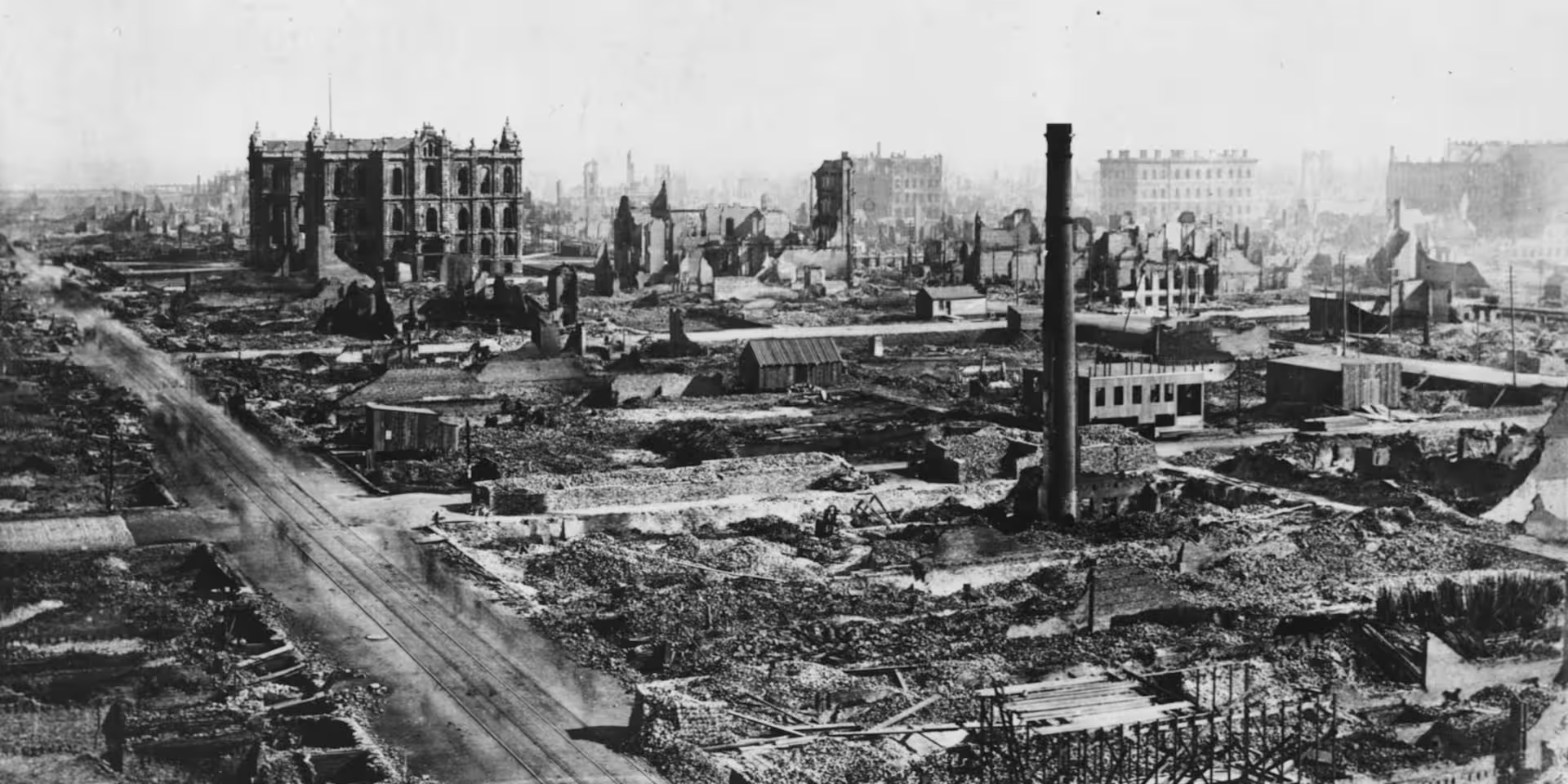
According to the History.com website despite the fire’s devastation, much of Chicago’s physical infrastructure, including its water, sewage and transportation systems, remained intact. Reconstruction efforts began quickly and spurred great economic development and population growth, as architects laid the foundation for a modern city featuring the world’s first skyscrapers. At the time of the fire, Chicago’s population was approximately 324,000; within nine years, there were 500,000 Chicagoans. Monetary donations flowed into Chicago from around the country and abroad, along with donations of food, clothing, and other goods. These donations came from individuals, corporations, and cities. New York City gave $450,000 along with clothing and provisions, St. Louis gave $300,000. By 1893, the city was a major economic and transportation hub with an estimated population of 1.5 million. That same year, Chicago was chosen to host the World’s Columbian Exposition, a major tourist attraction visited by 27.5 million people, or approximately half the U.S. population at the time.

The famous theory that Mrs. O’Leary’s cow was responsible for the fire remained through out the years. Mrs. O’Leary, herself, lived out her years in quiet seclusion. The cow was also not ‘herd’ from again. In 1997, Chicago’s Committee on Police and Fire replaced local legend with a better version of history and voted to exonerate Catherine O’Leary and her infamous cow.
I’m SABear and I approve this message

HOME

 Life is not a Spectator Sport
Leave a comment