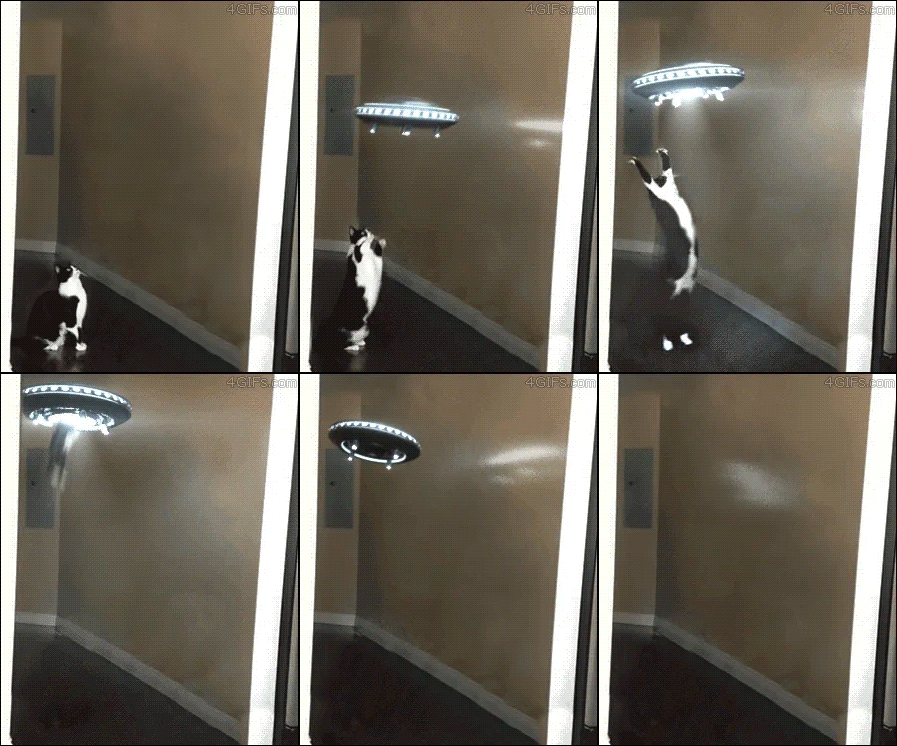
When I was a kid, one of my earliest memories was watching episodes of the TV show The Twilight Zone. One of my favorites was the story of rural general-store owner Somerset Frisby. He would hold court around the central stove and tell tall tales about himself. During one of these sessions, visiting aliens overhear him and mistakenly believe he is one of Earth’s leading intellectuals. He is abducted but manages to escape his captors with the help of his trusty harmonica, the noise of which incapacitates the aliens. He quickly returns to his store and, although still panicked, begins recounting his ordeal to his buddies. They respond with roaring laughter and congratulate him on being one of the biggest liars ever.
That is loosely how many people who report abductions are perceived. A 2025 survey found that a total of 182,018 UFO sightings had been reported across America since 1974, putting the odds of a person seeing a UFO at roughly 1 in 1,833 (0.0545%)—surprisingly more common than one might think.
Aerial phenomena have received a surprisingly high amount of mainstream news coverage in recent years. YouTube is full of UFO videos, and with the advancement of AI, it is anyone’s guess what percentage of these videos are genuine. Beginning in November 2024, hundreds of drones—some reportedly the size of small cars—were observed along the East Coast as well as in other parts of the country and abroad. The federal government has even released footage of flying objects it says it cannot explain.

The term “UAP” was adopted by the U.S. Department of Defense in 2022 to bring a more scientific lens to the issue. Scientists who were once hesitant to discuss UFOs due to the stigma of pseudoscience are now becoming more involved in their study. While the government continues to investigate, a significant portion of the public remains skeptical of extraterrestrial explanations for UAPs (Unidentified Aerial Phenomena). However, increased attention and official inquiries are likely contributing to greater awareness and, perhaps, a gradual shift in public perception over time.
The “black sheep,” or crazy uncle, of the UAP movement among ufologists is the subject of human alien abductions. The precise number of alleged abductees is uncertain. Some early studies identified approximately 1,700 claimants, while other surveys have argued that as many as 6 percent of the general population allege some form of abduction experience.
Psychology Today and similar publications offer insights into the psychological aspects of alien-abduction reports, including explanations for why people might believe they have been abducted. Some studies conclude that dream–reality confusion is common among individuals with sleep disorders and can lead to vivid false memories or “dream delusions.” Other research suggests that certain personality traits may increase susceptibility to such experiences.
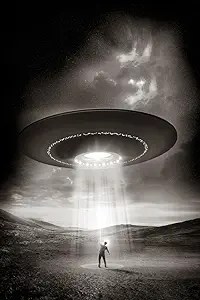
In my humble opinion, aliens physically taking humans is often seen as a bridge too far—even among many UFO enthusiasts. If abductions and cattle mutilations are removed from the equation, it is believed that as much as 40 percent of the population might be open to the broader UFO discussion. Visitations, sightings, and perhaps even crop circles may eventually gather enough circumstantial evidence to sway some skeptics. Secret alien saucers, hidden corpses, and government cover-ups, however, remain that bridge too far for many.
I believe. I believe because of what I have seen, and because I am simply the kind of person who has faith.
I have watched interrogation footage of Betty and Barney Hill, Travis Walton, Antônio Vilas-Boas, and the Pascagoula abductees, and those individuals truly seem to believe they experienced something horrific. Hopefully this is not another MK-Ultra–style government episode conducted on thousands of unsuspecting citizens. Even worse—what if Dwight D. Eisenhower really did make a deal with aliens? What? You’ve never heard of the deal? I’m sure it’s in one of these posts somewhere…
I’m S.A.Bear and I approve this message.

HOME


 Life is not a Spectator Sport
Leave a comment