
In the 1850’s, slavery and the potential to expand and legalize slavery was the hot topic of American politics. The issue caused the Democratic party to split with southern Dems supporting slavery. Some of the northern Dems, a chunk of the Whig party and anti-slavery activists joined to form the Republican party in reaction to this crisis. The 1854 Kansas-Nebraska Act provided the main spark by allowing settlers in newly forming western states to decide whether they wanted to allow slavery. The morality of treating people as property was splitting the country.
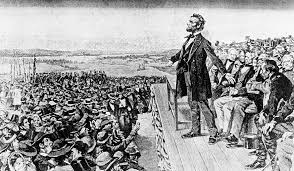
Abraham Lincoln, a lawyer and politician from Springfield, Illinois, ran for and won a seat in Congress as a Whig in 1846. He rode the surge of the Republican party as he challenged Stephen Douglas for his U.S. Senate seat in 1858. In a series of debates, Lincoln’s views on slavery were carried in the Chicago Daily Press and the ChicagoTribune. A portion of those statements include, “ I will say in addition to this that there is a physical difference between the white and black races which will ever forbid the two races living together on terms of social and political equality. And inasmuch as they cannot so live, while they do remain together, there must be the position of superior. I am as much as any other man in favor of having the superior position assigned to the white race.
Lincoln did not defeat Douglas, but his growing popularity grew to the extent that he was cast as the Republican presidential candidate in 1860. Lincoln beat the three others running including Senator Douglas, largely benefiting from carrying the more populous northern states that were strongly abolitionists. Before he was inaugurated, seven states had seceded from the Union.
In his first inaugural address, delivered on March 4, 1861, Abraham Lincoln aimed to reassure the Southern states that he would not interfere with slavery where it existed and to prevent the nation from dissolving through secession. He emphasized the indivisibility of the Union, stating that no state could lawfully leave it, and warned that any act of aggression against the United States would be met with force. Despite his conciliatory tone regarding slavery, Lincoln firmly rejected the idea of secession, calling it “the essence of anarchy” and asserting that no state could unilaterally leave the Union.

The economy of the slavery issue was fairly simple. The North was highly industrialized and highly urbanized, with a society based on manufacturing. The South, on the other hand, was agricultural. They needed slaves to work the fields and labor on plantations. Southern Democrats knew that only rebellion could save their economy.
During the summer of 1862, Lincoln privately debated whether emancipation should be used to help defeat the Confederacy. Drawing on his power as Commander-in-Chief, he declared it was militarily necessary to seize property including enslaved people. Fort Sumter, a Union military site, was located on Charleston Harbor in the newly seceded territory of South Carolina. The Confederacy fired on Fort Sumter at 4:30 a.m. on April 12, 1861, because they viewed the fort as a symbol of Union authority within their newly formed nation, the Confederate States of America. Less than 34 hours later, Union forces surrendered. Traditionally, this event has been used to mark the beginning of the Civil War.
Once the war began, northern armies refused the service of black men, in spite of a rush to enlist. The South, on the other hand, took full advantage of slave labor in factories, military hospitals, and other Confederate war efforts. Lincoln needed to galvanize the country around a goal beyond saving the Union. He first announced declaring the abolishment of slavery in September of 1862. As the war raged on and losses were heavy, Lincoln was compelled to sign the Emancipation Proclamation on January 1, 1863. The war now would gain moral weight, making the stakes more meaningful. Blacks could now be allowed to enlist in the Union forces and European countries, which were not opposed to a divided U.S. were more persuaded to sit out the American Civil War.
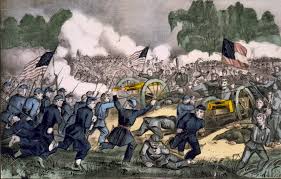
Lincoln knew this was a key turning point of the war. He wrote, I know very well that the name which is connected with this act will never be forgotten…It is my greatest and most enduring contribution to the history of the war. It is, in fact, the central act of my administration, and the great event of the nineteenth century. — February 1865
Freed and escaped slaves fled to the North, some joining the Union army. The South suffered as it lost its workforce and southerners scrambled to hide their slaves. The Emancipation Proclamation did not end American slavery, but it fundamentally changed the nature of the war and history.
On April 9, 1865, General Robert E. Lee surrendered his Confederate troops to the Union’s Ulysses S. Grant at Appomattox Court House, Virginia, marking the beginning of the end of the grinding four-year-long American Civil War. But it would be more than 16 months before President Andrew Johnson would declare a formal end to the conflict in August 1866.

 Life is not a Spectator Sport
Leave a comment