Few disasters in modern history have inspired as many “what if” questions as the sinking of the RMS Titanic. Among the most intriguing is a seemingly small detail: what if Second Officer David Blair had remained aboard when the ship sailed from Southampton on April 10, 1912?
At first glance the question appears trivial. Blair was removed from the crew shortly before departure after the White Star Line reorganized the officer roster. Yet his sudden reassignment created an unusual problem. In the confusion of leaving the ship, Blair accidentally kept the key to a locker containing binoculars intended for the lookouts in the crow’s nest. When Titanic began her voyage across the North Atlantic, the men responsible for scanning the horizon—among them lookout Frederick Fleet—had no access to the optical equipment.
This small oversight has become one of the most debated details of the disaster that unfolded during the night of April 14–15, 1912.
The Missing Binoculars
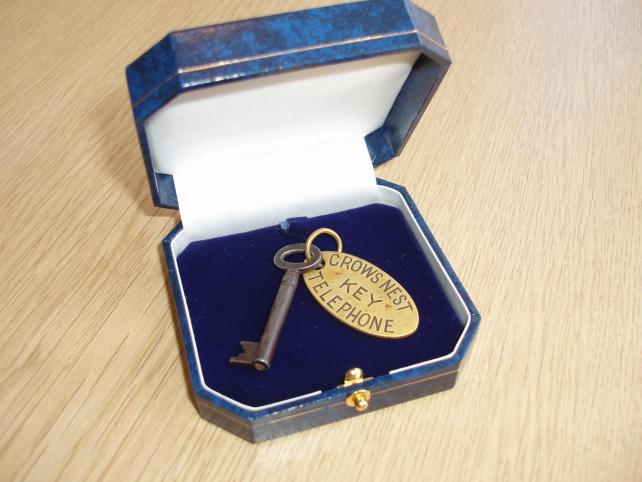
The story itself is straightforward. When Blair left the ship, he unknowingly took the locker key with him. Inside that locker were binoculars intended for use by the crow’s nest lookouts. Without the key, the equipment remained locked away for the entire voyage.
For the lookouts, the North Atlantic that night was unusually calm and moonless—conditions that actually made spotting icebergs more difficult. Normally, waves breaking against ice create white foam that can be seen from a distance. On that still night, however, the ocean was nearly flat.
During later inquiries into the disaster, Fleet famously testified that binoculars might have made a difference. Asked whether optical equipment could have helped, he responded bluntly: “If we had had binoculars, we would have seen it sooner.” When pressed on how much sooner, he replied: “Enough to get out of the way.”
Statements like this helped cement the missing binoculars as one of the great “lost chances” of the tragedy.
Were Binoculars Actually Necessary?
Despite Fleet’s testimony, maritime historians remain divided on whether the presence of binoculars would truly have changed the outcome.
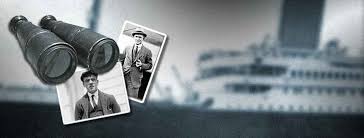
In 1912, the standard practice for lookouts was to rely primarily on the naked eye. Binoculars were often considered secondary tools because they narrowed the field of vision. A lookout scanning for hazards needed to survey a wide stretch of ocean, and using binoculars could make it easier to miss something outside the magnified view.
Some experts argue that binoculars are more useful for identifying objects that have already been spotted rather than for initial detection. In other words, they might have helped confirm that the object ahead was an iceberg—but not necessarily helped spot it sooner.
Others disagree, pointing out that in extremely dark conditions even a small magnification advantage could have provided additional seconds of warning.
The Chain of Small Decisions
The larger story surrounding Blair’s missing key illustrates how disasters often result from a chain of seemingly minor events.
Titanic was traveling at nearly full speed through an area known for drifting ice. Wireless operators had received several warnings earlier that day, but the ship maintained its pace. The bridge officers believed they had enough visibility to react if danger appeared.
When the iceberg was finally sighted at about 11:40 p.m., the crew had less than a minute to respond. Despite the quick actions of First Officer William McMaster Murdoch, the enormous liner could not turn quickly enough to avoid scraping along the ice.
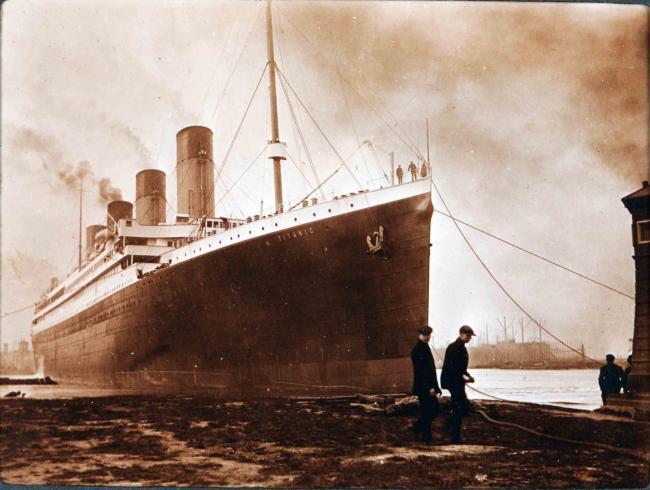
The collision opened multiple compartments to the sea—more than the ship was designed to withstand. Within hours, the so-called “unsinkable” liner disappeared beneath the North Atlantic.
A Historical Footnote with Lasting Value
Ironically, the key that Blair accidentally took with him eventually became a historical artifact. Nearly a century after the disaster, it was sold at auction for over $100,000, a small brass reminder of how tiny details can echo through history.
But would the Titanic have survived if Blair had remained aboard and the binoculars had been available?
The honest answer is that no one can know for certain. Perhaps the iceberg would have been spotted minutes earlier, giving the crew enough time to steer clear. Or perhaps the outcome would have been exactly the same, with the ship still racing through dark waters at high speed.
What Blair’s forgotten key truly represents is something deeper: the fragile nature of history itself. The fate of the Titanic was shaped not by one single mistake, but by a web of human decisions, technological limitations, and simple chance.
And sometimes, history turns on something as small as a missing key.
I’m SABear and I approve this message


 Life is not a Spectator Sport
Leave a comment