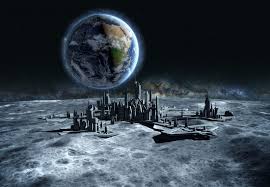
Today the Moon is a silent, airless world—beautiful to look at but utterly hostile to life. But imagine a very different scenario: a Moon with an atmosphere, liquid water, and an environment capable of supporting life. If our closest celestial neighbor were habitable, the story of Earth—and humanity—would likely be dramatically different.
First, the Moon itself would look far more spectacular from Earth. Instead of the pale gray disk we see now, its oceans would reflect sunlight, making it shine perhaps five times brighter in the night sky. Earth would essentially have a glowing “second planet” hanging overhead. If that world contained continents, clouds, and possibly even vegetation, our ancestors would have spent millennia staring upward at what might appear to be another living world.
A habitable Moon would also have powerful physical effects on Earth. Because it would likely be more massive in order to hold an atmosphere and water, its gravitational pull would generate much stronger ocean tides. Coastal environments—and possibly human settlement patterns—might have evolved differently under such dramatic tidal forces.
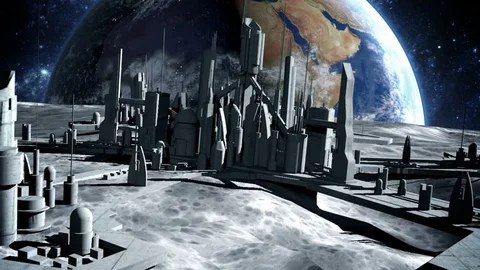
Human exploration would almost certainly have advanced much faster as well. Instead of a lifeless rock visited briefly in the twentieth century, the Moon would be the most obvious destination for colonization. Its proximity to Earth would make it a natural stepping-stone for exploration deeper into the solar system. Lunar bases could serve as launch sites for missions to Mars and beyond, taking advantage of the Moon’s weaker gravity—only about one-sixth that of Earth—to make space travel far easier.
Life on such a Moon might also be unlike anything found on Earth. If organisms had evolved independently there, they would represent a completely separate branch of biology. Lunar ecosystems could contain unfamiliar plants, animals, or microbial life adapted to lower gravity and a different environment. Humans living there would also face unique challenges. While the low gravity would allow for incredible feats of jumping and movement, settlers would need to manage long-term effects on muscle strength and bone density.
Interestingly, scientists have even proposed that the Moon may have briefly been habitable in the distant past. Some research suggests that about 3.5 billion years ago, intense volcanic activity may have released enough gases and water vapor to create a temporary atmosphere. Combined with evidence that lunar rocks contain more water than once believed—and that the early Moon may have possessed a magnetic field—conditions might have allowed pools or lakes of liquid water to exist for a time.
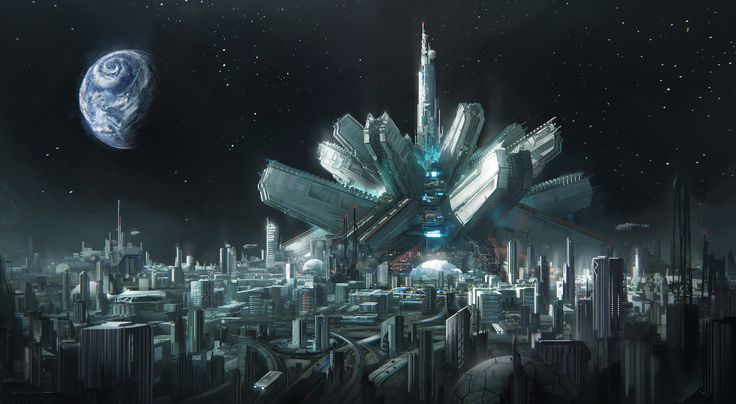
If that were true, microbes from early Earth might even have reached the Moon. Meteorite impacts can eject rocks from planets, potentially carrying microscopic life across space in a process known as lithopanspermia. Because the Moon is so close to Earth, such transfers would have been far easier than the journey between Earth and Mars.
Of course, any traces of such ancient habitability would be extremely difficult to detect today. For billions of years the lunar surface has been battered by solar radiation, cosmic rays, and micrometeorites, erasing much of its ancient history.
Still, the idea is fascinating to consider. If the Moon had remained a living world rather than a barren one, humanity might already share the night sky with another inhabited planet—one close enough to see with the naked eye. Instead of dreaming about distant worlds, we might simply look up and see one shining back at us.


 Life is not a Spectator Sport
Leave a comment