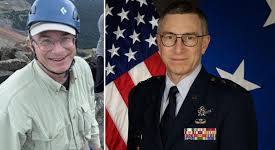
In an age where nearly every movement can be tracked, recorded, or retraced, the idea that someone can simply vanish feels almost impossible. Yet that is exactly what has happened in Albuquerque, New Mexico, where the disappearance of retired U.S. Air Force Major General William “Neil” McCasland has left investigators—and the public—searching for answers.
Nearly three weeks after he was last seen, the case remains as puzzling as it is unsettling.
A Routine Morning Turns Into a Mystery
On the morning of February 27, McCasland was at his home in Albuquerque’s Northeast Heights. A repairman reportedly interacted with him around 10 a.m., suggesting nothing out of the ordinary. Shortly after, his wife left for a medical appointment, expecting to return to a normal afternoon.
But when she came home just after noon, McCasland was gone.
What makes his disappearance particularly unusual is what he left behind: his phone, prescription glasses, and wearable devices—items most people rarely go without. By mid-afternoon, after failing to reach him through family and friends, his wife reported him missing, launching an investigation that has since grown in scale and urgency.

A Search With Few Clues
Authorities quickly mobilized, deploying drones, helicopters, K-9 units, and volunteer search teams. More than 700 homes in the surrounding area have been canvassed, and investigators have reviewed security footage in hopes of finding even a single trace of McCasland’s movements.
So far, nothing.
No confirmed sightings.
No video evidence.
No clear direction of travel.
Investigators did note that several items were missing from the home, including hiking boots, a wallet, and a .38-caliber revolver. Given McCasland’s reputation as an avid outdoorsman—someone who frequently hiked and explored the nearby Sandia foothills—this has led to speculation that he may have set out on foot.
Yet even that theory raises more questions than answers.
On March 7, searchers discovered a gray U.S. Air Force sweatshirt about 1.25 miles from his home. While it sparked renewed search efforts, it has not been confirmed to belong to him, and no evidence of injury was found.
The Silver Alert—and the Questions It Raised
Early in the investigation, authorities issued a Silver Alert, typically reserved for individuals over 50 who may be experiencing cognitive decline. This decision initially fueled concern that McCasland may have been disoriented.
However, officials later clarified that the alert was issued out of caution—not because of confirmed impairment.
Despite earlier mentions of “mental fog,” investigators emphasized that McCasland was highly intelligent, capable, and not believed to have been confused at the time he disappeared.
That clarification only deepens the mystery: if he was not disoriented, why leave so abruptly—and without essential items?
A Distinguished Career—and Unwanted Speculation
McCasland is not an ordinary missing person. During his career, he served as commander of the Air Force Research Laboratory at Wright-Patterson Air Force Base, overseeing billions of dollars in scientific and technological research.
His background has inevitably drawn public attention—and speculation.
Online theories have attempted to link his disappearance to classified programs or even UFO-related research tied to Wright-Patterson’s historical connection to Project Blue Book. These claims gained traction after it was revealed that McCasland briefly worked with Tom DeLonge, a musician-turned-UFO researcher, following his retirement.
But his family has firmly pushed back against such narratives.
His wife clarified that his involvement was limited to consulting on creative projects and emphasized that he had no special knowledge of extraterrestrial secrets or hidden government programs. Her statement aimed to refocus attention on the facts—and away from sensational distractions.
A Strange Parallel
Adding another layer of intrigue is the case of Monica Reza, an aerospace engineer who once worked on a government-funded project overseen by McCasland. She disappeared nine months earlier while hiking in a Los Angeles forest.
According to reports, Reza was walking just behind a companion when she suddenly vanished. Despite extensive search efforts, no trace of her was ever found.
Authorities have not confirmed any connection between the two cases, but the similarities—both involving highly accomplished individuals with ties to advanced aerospace work—have sparked quiet concern.
Coincidence or something more? For now, investigators are not drawing conclusions.

The Unanswered Questions
As the days pass, the list of questions continues to grow:
- Why would McCasland leave without his phone or glasses?
- Where was he headed—and why?
- Did he intend to return?
- And perhaps most troubling: how can someone disappear so completely in a populated area?
There is, as of now, no evidence of foul play. But there is also no clear explanation.
A Community Still Searching
Authorities are urging residents and businesses to review any security footage from the morning and early afternoon of February 27. Hikers in the Sandia foothills are also being asked to check personal recordings that might contain even the smallest clue.
The FBI has joined the investigation, underscoring the seriousness of the case.
For now, the search continues—not just for a missing man, but for answers.
I.M.H.O.
The disappearance of Neil McCasland is a reminder that even in a world saturated with technology, mysteries still exist. People still vanish. And sometimes, despite our best efforts, the truth remains just out of reach.
Until new evidence emerges, his case stands as a haunting question mark—one that his family, investigators, and the public are all hoping will someday be resolved.
I’m SABear and I approve this message.


 Life is not a Spectator Sport
Leave a comment