In many ways, religion remains one of the most paradoxical spaces in modern society. While women have made extraordinary gains in education, politics, and the workforce over the past century, religious institutions often lag behind. As scholars like Lee (2024) have noted, the religious sphere continues to be one of the most patriarchal domains in Western culture—marked by visible barriers to female leadership and a persistent imbalance of power.
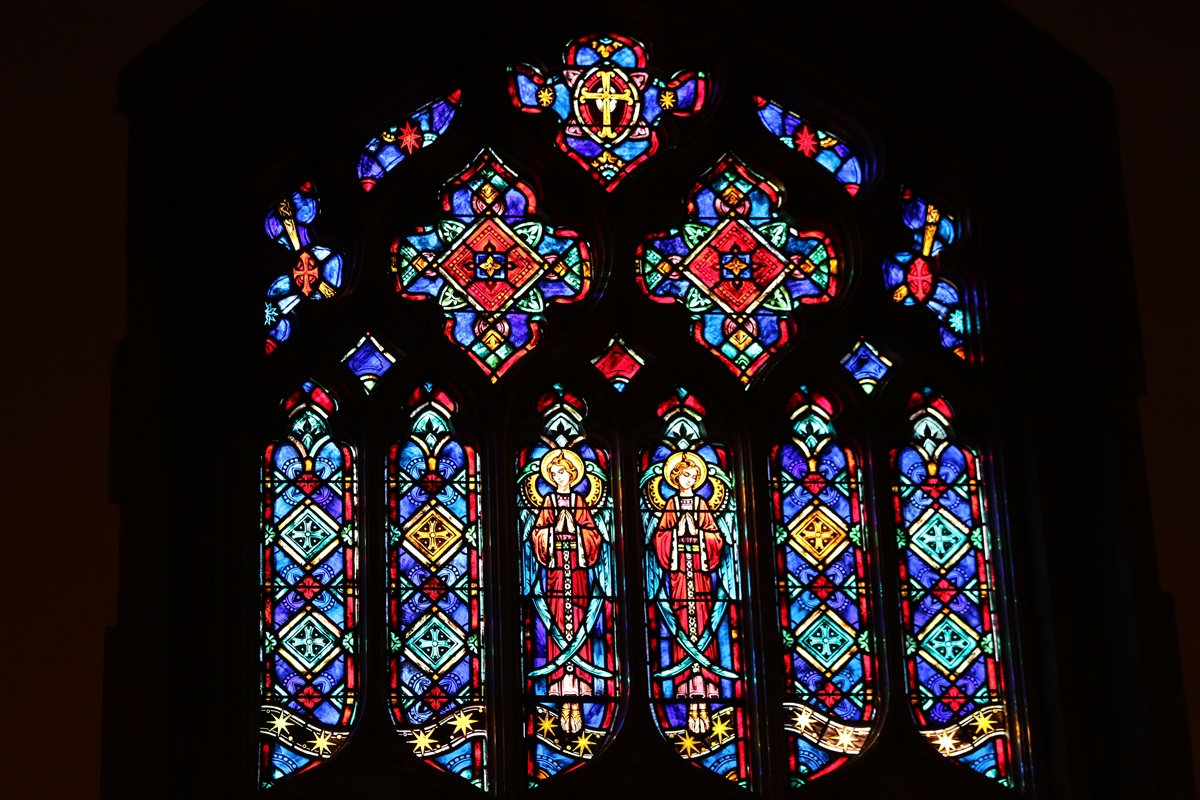
This contradiction is striking. In many religious traditions, women make up the majority of congregants, yet leadership roles remain overwhelmingly male. Even when women do attain positions of authority, they are frequently confined to smaller congregations or roles with limited influence. This phenomenon has come to be known as the “stained glass ceiling”—a powerful metaphor capturing the invisible but enduring barriers that prevent women from fully participating in religious leadership.
Historically, religion has played a central role in shaping gender expectations. In Christianity, for example, traditional interpretations of biblical texts often positioned women as caregivers, homemakers, and supporters of male authority. For centuries, women were excluded from preaching, priesthood, and other leadership roles, reinforcing broader societal norms about gender hierarchy.

Bishops Sandra Steiner-Ball (left) and Cynthia Moore-Koikoi are bishops in the United Methodist Church
Yet, the story is not one of stagnation alone. The 20th and 21st centuries have witnessed profound shifts. As women gained access to education and entered public life in greater numbers, their aspirations expanded beyond the domestic sphere. Many religious communities began to reflect these changes. Several Protestant denominations, including the Anglican, Episcopal, and United Methodist churches, now ordain women as priests and bishops. These developments represent meaningful steps toward inclusion, signaling that long-standing traditions can evolve.
However, progress remains uneven. Major institutions such as the Roman Catholic Church and the Eastern Orthodox Church continue to restrict women from serving as priests or bishops. While women contribute significantly as nuns, educators, and administrators, the highest levels of authority remain closed to them. This ongoing exclusion highlights the deep-rooted nature of patriarchal structures within religion.
Understanding the role of women in religion is crucial not only for evaluating religious institutions but also for understanding women’s lives more broadly. Religion has historically been one of the primary arenas of women’s activity, second only to the home. It has shaped how women see themselves, their roles in society, and their relationship to the world. By studying women’s religious experiences, we gain insight into their inner lives—their beliefs, struggles, and interpretations of reality across different cultures and historical periods.
Today, a new and unexpected shift is emerging. For decades, men were more likely than women to disengage from organized religion. But recent data suggests that this trend is reversing, particularly among younger generations. Among Baby Boomers who left their childhood religion, men made up the majority. In contrast, among Generation Z, women now lead in religious disaffiliation.
This reversal may reflect broader cultural and political changes. Increasingly, young women are embracing progressive values, particularly on issues such as gender equality and LGBTQ+ rights. At the same time, many major religious traditions continue to emphasize traditional gender roles centered on marriage and family. For some women, this disconnect creates tension between personal aspirations and institutional expectations.
Political dynamics appear to reinforce this divide. Surveys indicate that young men are trending more conservative, while young women are becoming more progressive. These differences extend to how each group defines success: young men are more likely to prioritize marriage and children, while young women often place less emphasis on these factors. As a result, religious teachings that stress traditional family structures may resonate less with a growing number of women.
Ultimately, religion does not exist in a vacuum. It both reflects and shapes the cultural norms of its time. The continued struggle for gender equality within religious institutions mirrors broader societal debates about power, identity, and opportunity. Whether these institutions will adapt to the changing expectations of women—or risk losing their engagement altogether—remains an open question.
What is clear, however, is that the voices and experiences of women are essential to the future of religion. Breaking through the stained glass ceiling is not just about representation; it is about re imagining the role of faith in a world where equality is no longer optional, but expected.
I’m SABear and I approve this message.


 Life is not a Spectator Sport
Leave a comment