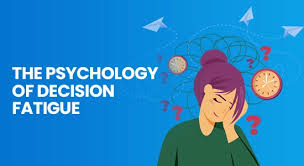
Parole hearings, which take place between judges and prisoners, are typically scheduled throughout the day. Certain prisoners are given the opportunity for parole at different points in their sentences. Studies of parole case histories indicate that the time of day a hearing occurs can influence its outcome—prisoners whose cases are heard earlier in the day are more likely to be granted parole. Why might this be the case?
In bail hearings, the order in which cases are presented, along with the length of court sessions, can also affect judges’ decisions. In both civil and criminal courts, judges who hear many cases in a single day may become mentally exhausted by the time later cases are reviewed. Workload fatigue in judicial decision-making has rarely been tested in the United States, yet research suggests that charges are less likely to be dismissed at the end of a court session than at the beginning.
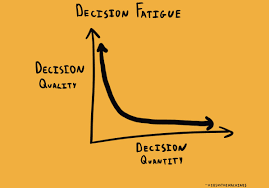
Social psychologists argue that individuals have limited mental capacity and that mental fatigue can lead people to rely on shortcuts, make less thoughtful decisions, or revert to the status quo—especially later in the day or after repeated decision-making. In 1998, Roy Baumeister published research exploring how the mental effort involved in making choices can lead to diminished self-control and impaired judgment. From this work emerged the concept of decision fatigue.
Baumeister’s research proposed that our ability to exercise self-control decreases with continued decision-making, much like physical strength becomes depleted with exertion. Decision fatigue refers to the declining quality of decisions made after a long session of choices or after particularly difficult decisions. This state can result in poorer judgment and an increased tendency to avoid making further decisions altogether.
Subsequent researchers have examined this phenomenon in other professions. For example, a study published in Health Psychology found that nurses tended to make less efficient and more costly clinical decisions the longer they worked without a break. Business choices, social interactions, and even leisure activities all require mental energy. The more complex the decision, the more quickly that energy may be depleted. Individuals experiencing decision fatigue may feel mentally foggy, tired, or emotionally drained as the day progresses.
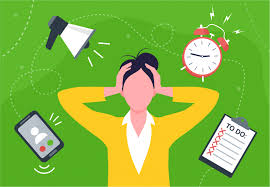
How can decision fatigue be reduced?
- Make critical decisions early in the day.
- Delegate or automate non-essential choices.
- Use structured decision-making frameworks such as cost-benefit or pro-and-con lists.
- Establish consistent daily routines to reduce unnecessary choices.
- Plan for potential problems in advance.
- Take regular breaks to restore mental energy.
In my humble opinion, the evidence suggests that decision fatigue is real—even if, at times, deciding what to think about it can be exhausting in itself.
I’m SABear and I approve this message
 What if.....Dinosaurs did not become extinct?
Leave a comment