condensed audio feed
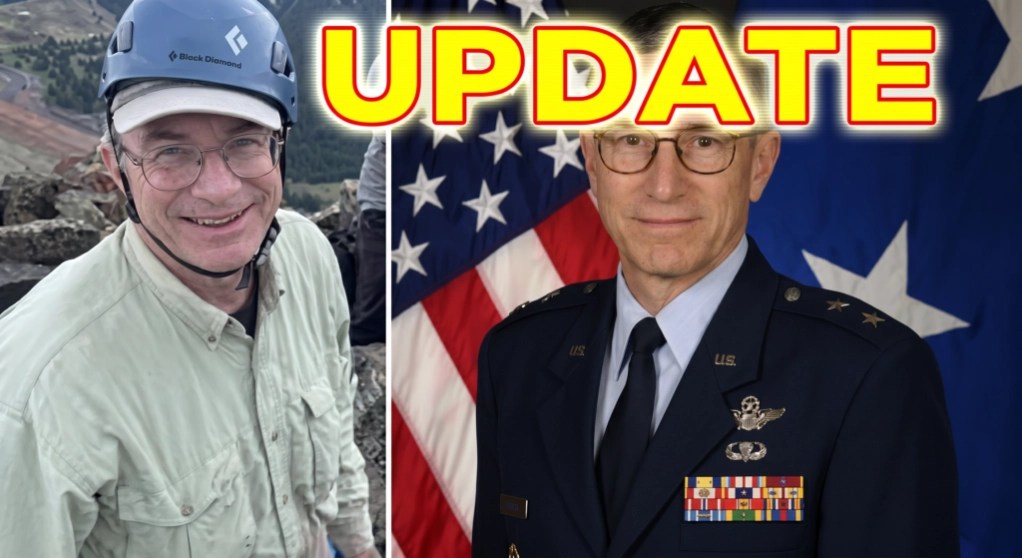
In an age defined by technological supremacy and geopolitical tension, the quiet disappearance—and in some cases, violent deaths—of highly specialized scientists has begun to stir something deeper than curiosity. It’s raising a question few are comfortable asking out loud: Is this coincidence, or something far more deliberate?
Consider the fragments of a troubling pattern.
A nuclear physicist and MIT professor is gunned down outside his Massachusetts home. A retired Air Force general vanishes without a trace from his residence in New Mexico. An aerospace engineer disappears during what should have been a routine hike in Los Angeles. These are not isolated figures living ordinary lives—they are individuals tied to some of the most sensitive and strategically important research sectors in the United States.
And they are not alone.
At least ten scientists and professionals connected to nuclear, aerospace, and defense-related work have died or gone missing in recent years under circumstances that, at best, defy easy explanation—and at worst, suggest something far more coordinated.
A Growing Federal Concern
The situation has escalated beyond speculation. The FBI has confirmed it is now spearheading a multi-agency effort to determine whether these cases are connected. Working alongside the Department of Energy, the Department of Defense, and local law enforcement agencies, investigators are attempting to piece together what, if anything, links these incidents.
That alone is significant. Federal agencies do not mobilize across departments without reason.
Simultaneously, the House Oversight Committee has launched its own investigation. In a statement, the committee acknowledged that these incidents “raise questions about a possible sinister connection,” and has requested formal briefings from the FBI, Department of Defense, Department of Energy, and NASA.
NASA, for its part, has confirmed cooperation with investigators, though it has publicly stated that, at present, nothing suggests a direct national security threat tied to its operations.
But the absence of confirmed threat is not the same as the absence of risk.
The Soft Targets of Strategic Warfare
One of the more sobering perspectives comes from lawmakers themselves. Representative Eric Burlison has openly suggested that foreign adversaries—namely China, Russia, or Iran—could have both the motive and the capability to target American scientists.
His reasoning is difficult to dismiss.
“These scientists are not hardened,” Burlison noted. “They don’t have a security detail. So they would be a very easy target.”
In modern conflict, the battlefield is no longer defined solely by geography. It extends into laboratories, research facilities, and even private homes. Intellectual capital—knowledge, innovation, and expertise—has become as valuable as any physical asset. Removing key individuals from that equation, whether through coercion, recruitment, or elimination, can have profound ripple effects.
And unlike military personnel or high-ranking officials, scientists often operate without protection, despite the sensitive nature of their work.
Coincidence vs. Conspiracy
Naturally, not every disappearance or death implies foul play. Scientists, like any group, are subject to the randomness of life—accidents, health issues, and personal circumstances. But patterns matter. And when multiple cases emerge involving individuals tied to high-level research, the threshold for concern lowers.
Online speculation has filled in the gaps where official information remains scarce. Some theories veer into the realm of the extraordinary, including whispers of connections to classified aerospace projects or even UFO-related research. While such claims remain unverified, they reflect a broader unease: a sense that critical pieces of the story are missing.
And that unease is not entirely unfounded.
A Silence That Speaks Volumes
Perhaps the most striking aspect of this unfolding story is not just what is known—but what isn’t.
Government agencies are investigating, but offering limited public detail. Lawmakers are raising alarms, but stopping short of definitive conclusions. Scientists continue their work, even as concerns grow quietly in the background.
This creates a vacuum—and vacuums invite speculation.
Is this a coordinated effort by foreign intelligence agencies seeking to disrupt American technological advancement? A series of unrelated tragedies amplified by coincidence? Or something more complex, operating in the gray space between national security and public transparency?
The Stakes
What makes this situation particularly unsettling is what’s at risk.
These are not just individuals—they are repositories of knowledge, innovation, and national advantage. Their work influences everything from defense systems to energy infrastructure to the future of aerospace technology.
If even a fraction of these cases are connected, the implications extend far beyond personal tragedy. They touch on national security, global competition, and the vulnerability of those who quietly shape the future.
Final Thought
For now, the investigations continue, and answers remain elusive.
But one thing is clear: when the minds driving a nation’s most sensitive advancements begin to vanish, it’s no longer just a series of isolated incidents. It becomes a story worth watching—closely.
Because in a world where information is power, the disappearance of those who hold it is never just coincidence… until proven otherwise.
I’m SABear and I approve this message.


 Life is not a Spectator Sport
Leave a comment