In 1916, after his ship, the Endurance, was crushed by Antarctic ice, Shackleton and his crew were stranded in one of the most unforgiving environments on Earth. After months of survival against overwhelming odds, Shackleton and two companions undertook a final, near-impossible trek across the mountainous interior of South Georgia to seek rescue.
Exhausted, starving, and freezing, the men pushed forward through glaciers and jagged peaks. Yet all three later reported the same eerie sensation: they were not alone. There was a fourth presence—silent, unseen, but unmistakably real—walking beside them. Shackleton described it as a comforting guide, something that seemed to lend strength and direction when their own reserves were gone. Remarkably, none of the men spoke of it during the journey. Only afterward did they confirm they had all experienced the same phenomenon.
Decades later, in a completely different kind of crisis, a similar experience emerged from the chaos of the September 11 attacks. Amid the smoke and fire inside the South Tower of the World Trade Center, Ron DiFrancesco found himself trapped, disoriented, and certain he would die. Initially moving upward with others, he realized too late that escape routes were cut off. Turning back, he encountered a wall of flames blocking his path.
Then, in the darkness and confusion, he heard a voice.
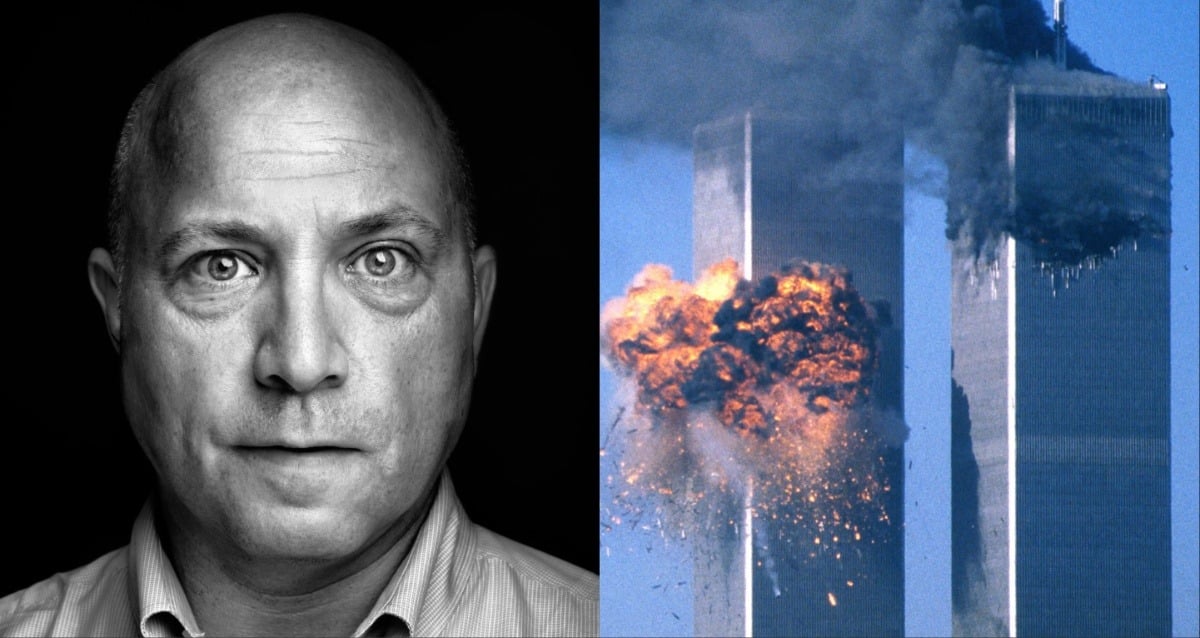
It urged him to stand, to move forward, to push through the fire. Trusting this unseen guidance, DiFrancesco did the unthinkable—he walked through the flames and found a way out. He would later become the last known person to escape the South Tower alive before its collapse. When he emerged and turned to thank the person who had guided him, there was no one there.
These accounts, separated by decades and circumstances, share a striking common thread: in moments of extreme stress, isolation, and danger, individuals perceive a benevolent presence that provides direction, encouragement, and sometimes even life-saving decisions. This is the essence of Third Man Syndrome—also known as the Third Man Factor.
In the most desperate moments of human survival, when the body is failing and hope seems extinguished, there are accounts of something extraordinary: an unseen presence that appears not to threaten, but to guide. This phenomenon sits at the strange intersection of psychology, survival instinct, and mystery. It is not merely folklore or superstition; it has been described by explorers, disaster survivors, and individuals facing the very edge of life itself.
Unlike typical hallucinations associated with mental illness, this phenomenon is not chaotic or distressing. Instead, it is purposeful and supportive. The “presence” is rarely seen clearly; more often, it is felt or heard, acting as a calm and steady companion in the midst of crisis. Survivors consistently describe it as helpful, even protective.
Psychologists and neuroscientists have proposed several explanations. One leading theory suggests that the brain, under extreme stress, activates a survival mechanism—essentially creating a secondary “voice” to guide decision-making when normal cognitive processes are overwhelmed. Another perspective links it to the concept of bicameral mentality, where internal thoughts are experienced as external commands or guidance. In this sense, the “third man” may be the mind’s way of separating critical survival instincts from conscious fear and doubt.
There is also the evolutionary argument: humans who could push beyond perceived limits in life-threatening situations were more likely to survive. The Third Man Syndrome may be an adaptive trait—a psychological failsafe that emerges only when it is needed most.
Yet, despite these explanations, something about the phenomenon resists being fully reduced to biology. The consistency of these experiences, across cultures and contexts, raises deeper questions. Why does the presence often feel distinctly “other,” rather than simply internal? Why does it appear with such clarity and purpose at precisely the moment it is needed?
Whether interpreted as a neurological response, an evolutionary advantage, or something more mysterious, the Third Man Syndrome reveals a profound truth about human resilience. In the darkest moments, when individuals are pushed beyond their limits, the mind—or perhaps something beyond it—can provide a final, guiding hand.
And for those who have experienced it, that unseen companion is not easily dismissed. It is remembered not as illusion, but as the presence that helped them survive when survival seemed impossible.
Their experience later inspired the poet T. S. Eliot. He dedicated part of his poem “The Waste Land” to the third man phenomenon, writing:“Who is the third who walks always beside you?
When I count, there are only you and I together
But when I look ahead up the white road
There is always another one walking beside you
Gliding wrapt in a brown mantle, hooded
I do not know whether a man or a woman
—But who is that on the other side of you?”


 Life is not a Spectator Sport
Leave a comment